Tag Archive for: Child Farmworkers

thumbnail

119th Congressional Bills endorsed by the Child Labor Coalition:


The Child Labor Coalition, comprised of 38 organizational members, endorses the following child labor bills in the 119th Congress:


Protecting child farmworkers:


  • R. 3335 – “Children Don’t Belong on Tobacco Farms Act by Rep. DeLauro” (D-CT)

62 cosponsors as of 3/30/2026

This bill bans direct contact with toxic tobacco on U.S. farms for minors.


  • 1742 – “Children Don’t Belong on Tobacco Farms Act” by Senator Durbin (D-IL)

4 cosponsors as of 3/30/2026

This bill bans direct contact with toxic tobacco on U.S. farms for minors.


  • R. 6066 –“Children’s Act for Responsible Employment and Farm Safety — CARE Act” by Rep. Ruiz (D-CA)

6 cosponsors in the 119th as of 3/30/2026

[A Senate introduction by Lujan expected soon in the 119th]

The bill raises the base age of farmwork from 12 to 14 and minimum age of hazardous farm work from 16 to 18 – the same as all other sectors. The bill does not apply to farm kids working on their family farm.


Bills to increase fines:

  • “Justice for Exploited Children Act of 2023” by Rep. Scholten (D-MI)

8 cosponsors in the 119th as of 3/30/2026

Raise child labor fines and criminal penalties substantially.


Bills that seek increased fines AND multiple other improvements:


Has 8 cosponsors as of 3/30/2026.

Raises child labor fines by a factor of 10, sets minimum fines, and enhances criminal penalties. It would establish a National Advisory Committee on child labor and foster interagency collaboration to combat child labor. It would call for the periodic review of hazardous work rules for children.


79 cosponsors in the 119th on 3/30/2026.

Would raise child labor fines by a factor of 10. Would improve record keeping requirements for employer to help labor law enforcement.


  • R. 7002 “Justice for Exploited Children Act” by Rep. Scholten (D- MI)

Has 8 cosponsors on 3/19.2026. The bill is bipartisan (Rep. Ryan Mackenzie (D-PA).

Increases child labor fines and criminal penalties substantially.


Federal Procurement Bills regarding child labor:

  • 920 – “Preventing Child Labor Exploitation Act” by Senator Josh Hawley R-MO.

1 cosponsor as of 3/19/2026.

[This bill is bipartisan – Sen. Booker is the other lead]

The bill bars companies that have repeat child labor violations from selling goods to the U.S. government.


We urge congressional members to join the Congressional Child Labor Prevention Task Force, which is led by Rep. Scholten (D-MI) and Rep. McGarvey (D-KY).


Staffers, please let us know when your office introduces a child-labor related bill. Email info to Reid Maki at reidm@nclnet.org or call 202-207-2820.


The Child Labor Coalition congressional champions from the 118th Congress:


The Child Labor Coalition represents 38 groups that work collaboratively to reduce child labor.  

thumbnail

Senator Luján Press Release: During Ag Week, Luján Introduces Legislation to Improve Child Protections and Safety Standards for Agriculture Industry

Senator Ben Ray Luján’s legislation would significantly improve protections for child farmworkers

Press Release/March 21, 2024

Washington, D.C. – Today, U.S. Senator Ben Ray Luján (D-N.M.) introduced the Children’s Act for Responsible Employment in Agriculture (CARE) Act to ensure child protections and safety standards for children in the agricultural workforce. Agriculture is the only industry with labor laws that allow children as young as 12 to work with virtually no restrictions on the number of hours they work outside of school. Across the United States, there are hundreds of thousands of children who are working in the agricultural industry and performing the grueling work required to plant, pick, process, and pack food that Americans eat every day.

The CARE Act takes steps to improve child worker safety by adjusting the age and work hour standards for children in agriculture to the standards for children working in all other industries. Among its other provisions, the bill would also increase the civil and criminal monetary penalties for child labor violations, and provide children with greater protection against pesticide exposure. The CARE Act’s child labor protections would not apply to the children of farmers working on their parents’ farm.

“With their whole future ahead of them, our country must do better protecting children working in the agriculture industry,” said Senator Luján. “Across the country, thousands of children are working under hazardous conditions in the agriculture sector, risking their health and education. I’m introducing the CARE Act to raise the floor and bring our agricultural labor lines in with other industries to better protect children and improve the working conditions they operate in.”

“It’s amazing to us that discriminatory loopholes, which allow very young kids to work 70- and 80-hours a week, performing back-breaking labor on farms, have been allowed to exist since the 1930s,” said Reid Maki, Director of Child Labor Advocacy for the National Consumers League and the Child Labor Coalition. “The impact of the exemptions on farmworker children educationally is very harmful and their health is at great risk from agricultural dangers. We’re so happy Senator Luján has taken action to right our inadequate child labor laws.”

“The US will not fix the country’s child labor problem until Congress provides children working in agriculture with the same protections as all other working children. Congress should pass this bill without delay to protect children from dangerous work that harms their health and development,” said Jo Becker, children’s rights advocacy director, Human Rights Watch.

This legislation is endorsed by the Child Labor Coalition (37 member organizations), Campaign to End US Child Labor, AFL-CIO, American Federation of Teachers, Association of Farmworker Opportunity Programs, Bon Appétit Management Company, Farmworker Justice, First Focus Campaign for Children, Florida Policy Institute, Food Empowerment Project, Global March Against Child Labour, Green America, HKM Employment Attorneys LLP, Human Rights Watch, Jobs with Justice, Kailash Satyarthi Children’s Foundation – US, Free the Slaves, MANA, A National Latina Organization, Marshfield Clinic Health System, Media Voices for Children, Migrant Legal Action Program, National Association of State Directors of Migrant Education, National Consumers League, National Council for Occupational Safety and Health, National Education Association, National Employment Law Project—NELP, National Farm Medicine Center, National Farmworker Ministry, National Migrant and Seasonal Head Start Association, Northwest Workers’ Justice Project, Phoenix Zones Initiative, Project Protect Food Systems Workers, Social Accountability International, The Tendai Initiative, United Farm Workers, United Food and Commercial Workers Union, and Virginia Interfaith Center for Public Policy.

The Children’s Act for Responsible Employment in Agriculture (CARE) Act:

  • Amends the Fair Labor Standards Act (FLSA) by bringing the age and work hour standards for children working in agriculture up to the standards set under FLSA for all other forms of child labor;
  • Protects family farm and 4-H, educational, and vocational training exemptions so that children would continue to be able to work for educational programs to expose and encourage them to pursue agricultural careers;
  • Protects and expands the family farm exception to ensure children can continue to work on their family farms;
  • Increases maximum civil monetary penalties for child labor violations from $11,000 to $151,380, adjusted annually to CPI, and for violations that result in death or serious injury from $50,000 to $690,000, adjusted annually to CPI;
  • Increases maximum criminal penalties for child labor violations to $750,000, adjusted annually to CPI, or five years imprisonment;
  • Repeals the wavier provisions for hand harvest laborers and pesticide-related worker protection standard to better protect children from pesticide and chemical exposure;
  • Expands FLSA protections against child labor to independent contractors; and mandates annual reports to Congress on child labor and work-related injuries to children, requires employers to report the ages of workers injured or killed on the job as a part of existing fatality and injury reporting requirements, and mandates a memorandum of understanding between the Assistant Secretary of Labor for Occupational Safety and Health and the Administrator of the Wage and Hour Division of the Department of Labor to ensure better data sharing between agencies and states.

Full text of the bill can be found here.

This press release is from the web site of Senator Luján and can be found here.

thumbnail

Children Working in Terrifying Conditions in US Agriculture — New Research Shows Child Farmworkers Unprepared for Workplace Dangers

By Margaret Wurth

Senior Researcher, Children’s Rights Division, Human Rights Watch (HRW)

Margaret Wurth, HRW

New research published in the American Journal of Industrial Medicine reinforces just how dangerous agricultural work is for children in the United States – and how unprepared most are for what they face in the fields.

More US child workers die in agriculture than in any other industry. Every day, 33 children are injured while working on US farms. And they receive frighteningly little safety training, making their work in demanding environments even more dangerous.

Researchers from Wake Forest School of Medicine interviewed 30 child farmworkers, ages 10 to 17, and published their findings in two articles that describe how children are pressured to work quickly, with little control over their hours or the nature of their work.

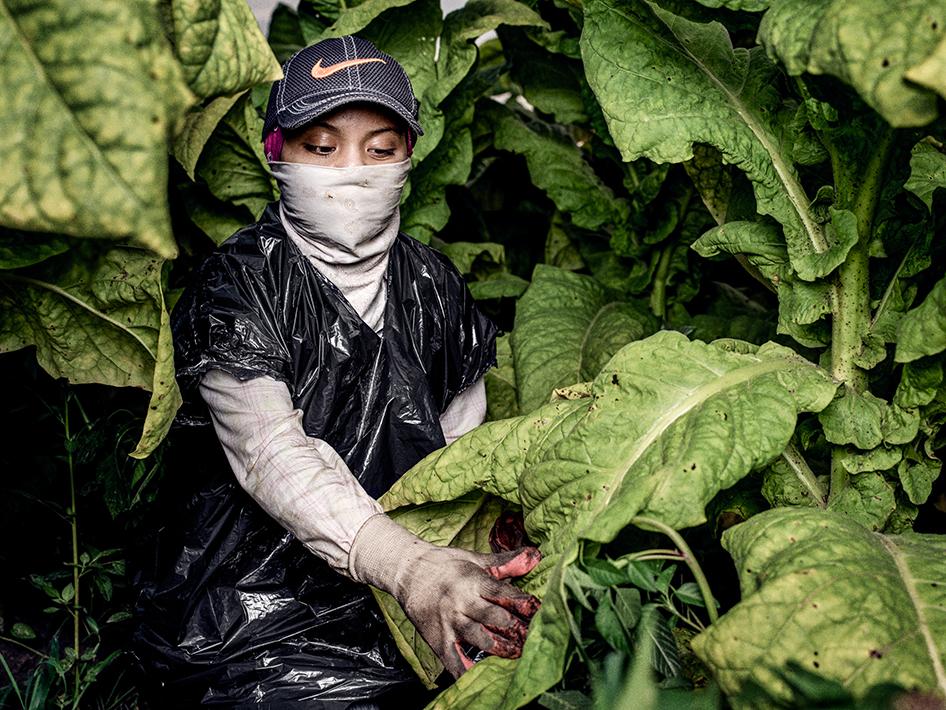
“Sofia,” a 17-year-old tobacco worker, in a tobacco field in North Carolina. She started working at 13, and she said her mother was the only one who taught her how to protect herself in the fields: “None of my bosses or contractors or crew leaders have ever told us anything about pesticides and how we can protect ourselves from them….When I worked with my mom, she would take care of me, and she would like always make sure I was okay.…Our bosses don’t give us anything except for our checks. That’s it.” © 2015 Benedict Evans for Human Rights Watch.


The children interviewed feared having their pay docked or being fired if they couldn’t keep up.

They received little – if any – safety training. One 14-year-old worker said: “When you’re chopping with the machete, they say, ‘Oh, be careful, like, to not hurt yourself,’ but that’s basically it.”

Children I’ve interviewed for Human Rights Watch investigations of child labor in US tobacco farming had similar experiences, working long hours in extreme heat with virtually no safety training.

One 15-year-old child worker told me his mom – also a farmworker – was hospitalized after being sprayed with pesticides, but even then, his employer never told him how protect himself: “He just said, ‘Be careful.’ That’s all.”

Read more

thumbnail

Press Release: Rep. Roybal-Allard, 24 Cosponsors Reintroduce CARE Act to Strengthen Protections for Child Farmworkers

[Released by Rep. Roybal-Allard]

June 20, 2019

FOR IMMEDIATE RELEASE

CONTACT

Ben Soskin

(202) 225-1766

Benjamin.Soskin@mail.house.gov

Rep. Roybal-Allard, 24 Cosponsors Reintroduce CARE Act to Strengthen Protections for Child Farmworkers

Washington, DC Today, Congresswoman Lucille Roybal-Allard (CA-40) led the reintroduction of her Children’s Act for Responsible Employment and Farm Safety (CARE), which raises labor standards and protections for farm worker children to the same level set for children in all other occupations.  The congresswoman announced the CARE Act’s reintroduction at a press event in the U.S. Capitol alongside advocates including Mónica Ramírez, the president of Justice for Migrant Women; Norma López, the chair of the Domestic Issues Committee for the Child Labor Coalition; and Brenda Alvarez-Lagunas, a former child farmworker who recently made national news for her valedictorian speech at her high school graduation.  Congresswoman Roybal-Allard reintroduced today’s bill with 24 House cosponsors.

 “America is morally obligated to protect the rights, safety, and future of every child in our nation,” said Congresswoman Roybal-Allard.  “Sadly, our child agricultural workers do not enjoy these protections.  They currently face a double standard that lets them work at younger ages, for longer hours, and in more hazardous conditions than child workers in any other industry.  If we value our youth, if we support fair and decent treatment for all children, then we must pass the CARE Act and finally ensure fundamental protections for America’s child farmworkers.”

“Farmworker children pay the price for the inexpensive fruits and vegetables our nation consumes with their battered bodies, lost educational opportunities, and broken dreams because they are forced to work just to make ends meet for their families,” said Ms. Ramírez.  “The CARE Act seeks to put farmworker children on equal footing with other children by placing necessary restrictions on their ability to work in one of the most dangerous jobs in the US.”

“Today in America, as many as 500,000 children are performing back-breaking and often dangerous work on farms across the country with few protections, no safety training or equipment, and for very low wages,” said Ms. López.  “They are sacrificing their childhood, their education, and their health to help put food on their family’s table; yet the most they earn in a year is $2000.  America’s future is worth so much more.  It is time to end the double-standard farmworker children face and extend equal protections to all of America’s children.  It is time to pass the CARE Act.”

“I was in the fields as young as seven years old with continued exposure to harmful chemicals,” said Ms. Alvarez-Lagunas.  “I was working under the sun for hours at a time – this is why I am grateful for Roybal-Allard’s CARE Act.  It will help protect children from harmful conditions.”

“Why must we rely on children to harvest fruits and vegetables in America?,” said Reid Maki, Director of Child Labor Advocacy of the National Consumers League and Coordinator of the Child Labor Coalition.  “Why must Latino children bear the brunt of unjust laws?  The child labor exemptions in U.S. labor law constitute a de facto form of discrimination and why allow young children to work in what is the most dangerous industry?  These loopholes have been around since the enactment of the Fair Labor Standards Act in 1938.  Isn’t it time to protect all our children equally?”

Under current law, children in agriculture are allowed to work at younger ages and for longer hours than those working in other sectors.  Children as young as 12 can work with virtually no restrictions on the number of hours they spend in the fields outside of the school day.  Furthermore, children performing hazardous agricultural work can be as young as 16, while hazardous non-agricultural work is reserved for adults.  With the majority of work-related fatalities for children occurring in the agriculture sector, and past findings that child agricultural workers drop out of school at four times the national dropout rate, it is imperative for Congress to take action to protect these child workers.

Key provisions of the CARE bill:

While retaining current exemptions for family farms and educational programs like 4-H and Future Farmers of America, the CARE Act:

  • Brings age and work hour standards for children in agriculture up to the standards for children working in all other industries:
  Existing Law for Agricultural Employment Existing Law for Non-Agricultural Employment CARE Act provisions
Non-Hazardous Job, Age 12-13 Can work outside of school hours with parental consent. Prohibited. Prohibited.
Non-Hazardous Job, Age 14-15 Can work outside of school hours without any restrictions on number of hours per day or per week. Can work outside of school hours.  Cannot work before 7 a.m. or after 7 p.m. or for more than 3 hours on a school day or more than 18 in a school week. Imposes the same hour restrictions in place for non-agricultural workers on agricultural workers.
Hazardous, Age 16-17 Minimum age is 16 for hazardous jobs. Prohibited until age 18. Prohibited until age 18.
  • Establishes a minimum penalty for child labor violations;
  • Increases the maximum civil monetary penalties and maximum criminal penalties for child labor violations;
  • Provides children with greater protections against pesticide exposure in agriculture by raising the labor protections to EPA standards.
  • Includes reporting requirements on work-related injuries and serious illness.

The CARE Act’s original cosponsors include Congressmembers Nanette Diaz Barragán (CA-44), Karen Bass (CA-37), Tony Cárdenas (CA-29), David Cicilline (RI-01), Yvette Clarke (NY-09), Rosa DeLauro (CT-03), Ruben Gallego (AZ-07), Sheila Jackson Lee (TX-18), Marcy Kaptur (OH-09), Barbara Lee (CA-13), Andy Levin (MI-09), Alan S. Lowenthal (CA-47), Stephen F. Lynch (MA-08), James P. McGovern (MA-02), Gwen Moore (WI-04), Grace F. Napolitano (CA-32), Eleanor Holmes Norton (DC), Mark Pocan (WI-02), Gregorio Kilili Camacho Sablan (MP), Janice D. Schakowsky (IL-09), Adam B. Schiff (CA-28), José E. Serrano (NY-15), Albio Sires (NJ-08), and Frederica S. Wilson (FL-24).
 

thumbnail

CARE Act’s 24 Co-sponsors in the 116th Congress

The Children’s Act for Responsible Employment and Farm Safety was introduced by Rep. Lucille Roybal-Allard on June 20, 2019 with 24 original cosponsors (bold). For the goals of the CARE Act, click here.


Nanette Diaz Barragán (CA-44)

Karen Bass (CA-37)

Tony Cárdenas (CA-29)

David Cicilline (RI-01)

Yvette Clarke (NY-09)

Rosa DeLauro (CT-03)

Ruben Gallego (AZ-07)

Sheila Jackson Lee (TX-18)

Marcy Kaptur (OH-09)

Barbara Lee (CA-13)

Andy Levin (MI-09)

Alan S. Lowenthal (CA-47)

Stephen F. Lynch (MA-08)

James P. McGovern (MA-02)

Gwen Moore (WI-04)

Grace F. Napolitano (CA-32)

Eleanor Holmes Norton (DC)

Mark Pocan (WI-02)

Gregorio Kilili Camacho Sablan (MP)

Janice D. Schakowsky (IL-09)

Adam B. Schiff (CA-28)

José E. Serrano (NY-15)

Albio Sires (NJ-08)

Frederica S. Wilson (FL-24)

thumbnail

A Toxic Decision — How Protecting Child Farmworkers May Be Pushed Aside by the EPA

By Len Morris

America’s fields, orchards and farms are toxic places for children; and things could get much worse thanks to recent actions by the Trump administration Environmental Protection Agency led by Administrator Scott Pruitt, an ideologue willing to put business interests ahead of the health and welfare of migrant families and U.S. citizen children that the EPA. is responsible for protecting.

Len Morris

Over 2 million farm workers work in American agriculture, an estimated half a million of these are children. Their work puts them in daily direct contact with hazardous pesticides that can sicken them, lower their IQ, make them chronically ill or even lead to death. 

Two regulations to protect children from pesticide poisoning, illness and death, The Agriculture Worker Protection Standard of 2015 and The Certification of Pesticide Applicators Rule currently of 2017 make it illegal for children under 18 to handle these chemicals, especially those considered most toxic and lethal. These are the protections Pruitt has proposed revising/eliminating.

For children on farms, pesticide exposure is particularly hazardous. The American Academy of Pediatrics has said there is a clear link between childhood exposure to pesticides and pediatric cancers, decreased cognitive functions and behavioral problems. Young children are especially vulnerable as they metabolize poisons faster than adults. 

An estimated 1.1 billion pounds of pesticides are applied to crops each year in the U.S.  The Environmental Protection Agency has reported 20,000 cases of pesticide poisoning, a low estimate since reporting is spare and migrant families are often afraid to seek medical attention. 

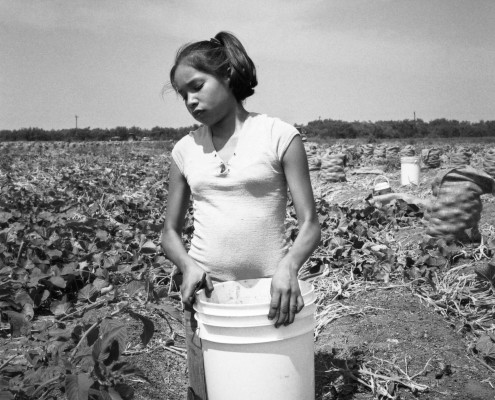
Yesenia, age 12, harvesting onions in South Texas (Photo courtesy of Robin Romano)

It’s one thing to streamline regulations to promote economic growth but quite another when the work of an agency has become so corrupted that it turns its back on children’s health. Today’s EPA. under Pruitt’s stewardship has become a shameful enterprise, weakening the health of all Americans by lowering the quality of the air we breathe, the water we drink and the safety of our food supply while compromising the health and safety of those who harvest our food.

Today, more Americans than ever before are purchasing organic and locally grown food in an effort to minimize their children’s exposure to pesticides. Shouldn’t we have the same basic consideration for those children whose families do the work of bringing that food to our table?

The public comment period for the proposed revisions has not opened yet.

This piece was originally published January 17, 2018 on the Media Voices for Children website. Len Morris is the executive director of Media Voices for Children and a film director who has made several documentaries about child labor, including “Stolen Childhoods.”


thumbnail

CARE Act Reintroduced–Would Equalize Protections for Children Who Work in U.S. Agriculture

Child Labor Coalition Press Release

More progress needed to reduce child labor; Urgent action required on Uzbekistan, Domestic Workers Convention, and U.S. farmworker children

For release: June 10, 2011

Contact: NCL Communications, (202) 835-3323, media@nclnet.org

Washington, DC—As World Day Against Child Labor on June 12 approaches, the Child Labor Coalition (CLC) is alerting the public that more than 200 million children still toil around the world, often in dangerous jobs that threaten their health, safety, and education.

Here in the United States, the CLC is applauding the anticipated re-introduction of the Children’s Act for Responsible Employment (CARE), which Rep. Lucille Roybal-Allard (D-CA) plans to sponsor once again next week. The legislation [H.R. 2234] would close loopholes that permit the children of migrant and seasonal farmworkers to work for wages when they are only 12 and 13 years old, often in harsh conditions—10- to 12-hour days of bending over and performing repetitive tasks in 90- to 100-degree heat.

“It’s time to level the playing field by closing these loopholes, which go all the way back to 1938, when the Fair Labor Standards Act was introduced,” said CLC Co-Chair Sally Greenberg, the Executive Director of the National Consumers League, a consumer advocacy organization that has worked to eliminate abusive child labor since its founding in 1899. “We must offer these children the same protections that all other American kids enjoy.”

“Working migrant children pay a heavy price educationally for their labor,” said Antonia Cortese, a Co-Chair of the CLC  and the Secretary-Treasurer of the American Federation of Teachers, which represents 1.5 million public service employees. “Many farmworker children leave school before the school year ends and return after it begins. The constant travel and work wears many children out. They struggle to catch up academically, but for many it’s a losing battle—and more than half never graduate high school.”

Read more